
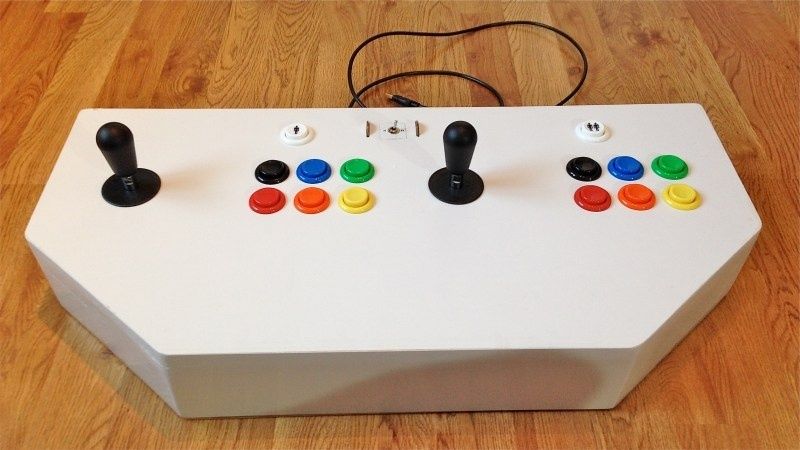
Modern gamepads present themselves as friendly objects, but their apparent simplicity conceals a demanding entrance exam. A contemporary controller can ask a newcomer to coordinate two analogue sticks, a directional pad, four face buttons, shoulder buttons, triggers, clickable sticks, menu controls, and motion or touch functions. None of these gestures is inherently natural. They become natural only after repetition, after the hands have absorbed a private grammar that experienced players often mistake for common sense.
That grammar creates an invisible divide. Players who grew up with controllers can move through a gamepad”s layout almost without looking, while newcomers, older players, disabled players, and people whose cultural relationship with games began elsewhere may encounter a wall of arbitrary mappings. The problem is not a lack of intelligence or dexterity. It is the design assumption that every body should adapt to the same industrial object. Critical writing on games as disabling infrastructures makes this point sharply: interfaces can turn play into a compatibility test, privileging bodies that match an imagined ideal user.
Custom controllers attack that assumption at its source. Instead of asking visitors to learn a legacy layout before they can participate, they translate rules into objects that communicate through size, resistance, sound, movement, and visual presence. A pedal, wheel, crank, rope, lever, or oversized switch can make an abstract command legible at a glance. In galleries, festivals, classrooms, and public installations, these devices turn play into an open arena where curiosity matters more than accumulated muscle memory.
Standard controllers are not neutral containers for game design. They encode expectations about reach, grip strength, reaction speed, visual attention, and the ability to interpret symbolic prompts under pressure. The familiar twin-stick arrangement assumes that one hand can manage movement while the other manages viewpoint and action, often while the player reads text, monitors audiovisual feedback, and responds to rapidly changing demands. This is an elegant solution for a particular kind of player, but elegance for one body can become exclusion for another.
The cultural gap is just as important as the physical one. Controller fluency works like an insider language. A seasoned player knows that a prompt displaying a particular glyph refers to a button in a particular region, even when the physical shape of that button has no meaningful relationship to the action. For an uninitiated player, the same prompt can feel like an instruction written in an unfamiliar script. Alternative-controller designers reverse the process by making the interface part of the explanation. A large dial suggests turning; a heavy lever suggests commitment; a pedal suggests pressure and sustained action.
This philosophy belongs to a wider history of designers questioning what games are allowed to look and feel like. The landmark V&A exhibition on videogames, design, play, and disruption, which ran as a temporary showcase at V&A South Kensington between September 2018 and February 2019, framed game craft as a field that repeatedly challenges conventional interfaces and habits. Bespoke controllers extend that disruption from the screen into the room, exposing the assumptions hidden inside familiar plastic.
| Conventional controller paradigm | Bespoke interface approach |
|---|---|
| Symbolic buttons whose meanings must be memorised | Objects whose shape and action suggest their purpose |
| Individual performance against a fixed input grammar | Shared or distributed interaction across several players |
| Fast responses rewarded through muscle memory | Material resistance used to shape tempo and attention |
| One standardised form expected to suit most bodies | Multiple materials, scales, gestures, and sensory cues |
The most effective alternative controllers often borrow from ordinary work. A sewing-machine pedal, industrial switch, telephone dial, kitchen utensil, or workshop handle arrives with a history of use already attached to it. Visitors do not need a tutorial explaining every possible button combination because the object carries an affordance. Pressing a pedal, turning a rotary dial, or hauling a lever is recognisable before the game has even begun.
That recognition can radically alter the atmosphere of a public exhibition. Throughout its decade-long history from 2015 to 2025, London”s Now Play This demonstrated how experimental games could occupy a transformative space between exhibition, workshop, and social laboratory before holding its eleventh and final edition at Somerset House in April 2025. Across that tenure, milestones like the 2018 festival edition brought together digital and analogue games, collaborative making, controller-building, prototype work, and activities organized around the theme of place. Its Makers” Corner made the design process visible, allowing audiences to encounter games not as sealed products but as things that could be questioned, modified, and built. Even as successor initiatives such as Strange Play and the Experimental Zone at New Game Plus take over curatorial ground at the London Games Festival, that decade of open-floor experimentation established a template for public engagement.
The festival model proved especially valuable because it removed the pressure to perform correctly. A visitor could approach an unfamiliar machine with a friend, test its rhythm, and learn through shared observation. In installations such as the bespoke alternative-controller hardware created by London College of Communication students for Now Play This”s final 2025 showcase, handcrafted physical interfaces built with tactile levers, contact points, and recycled mechanisms illustrated how experimental play carries narrative weight through direct, embodied participation. The controller becomes part of the cultural argument rather than a disposable delivery system.
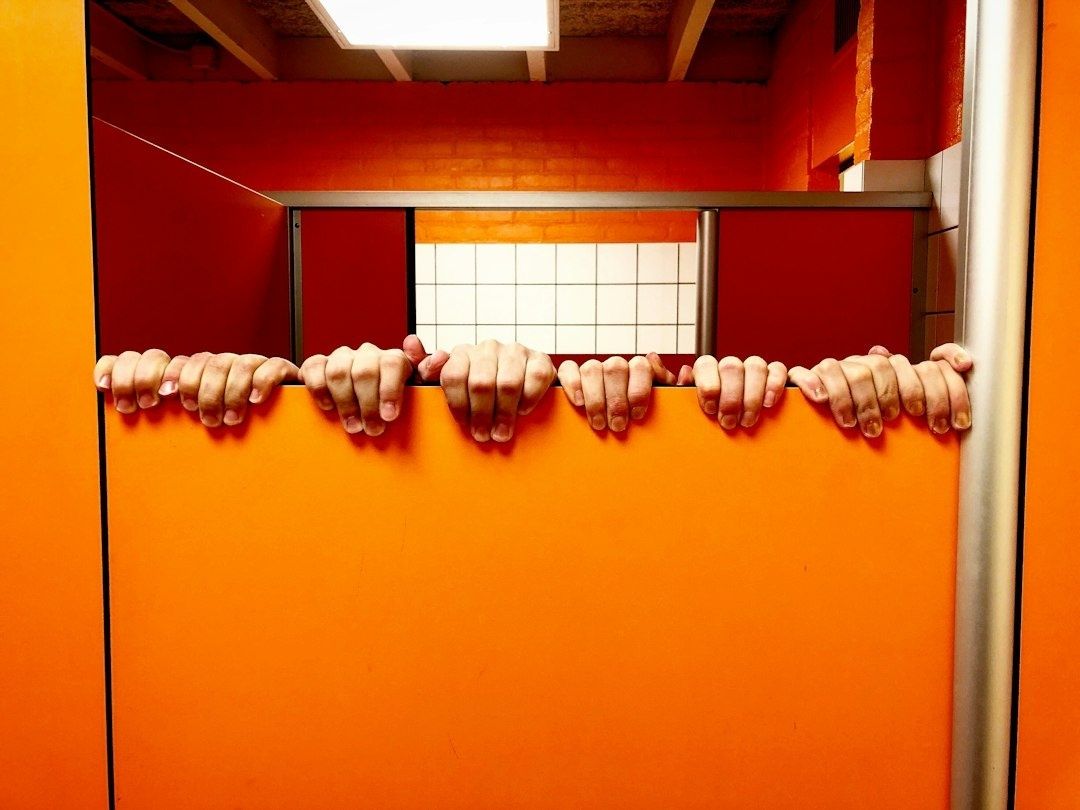
The alternative-controller movement thrives because it is unusually generous to beginners. Platforms such as alt.ctrl.GDC celebrate developer-made or creatively repurposed hardware paired with games that offer forms of interaction unavailable through standard controllers. The point is not novelty for its own sake. A successful project makes the physical device inseparable from the game”s meaning, giving players a reason to touch, push, turn, carry, or coordinate.
That approach also changes the social contract of the play space. In mainstream competitive games, the experienced player often becomes a coach while the newcomer becomes a liability. With a custom interface, everyone may be uncertain. The absence of established technique creates a temporary commons in which players experiment aloud, swap roles, and discover rules together. Performance anxiety gives way to communal curiosity because there is no single correct posture inherited from years of commercial play.
ChromaCorp offers a particularly strong example. Created by students at ArtCenter College of Design, the game places players inside a fictional company that controls the global colour supply. Participants perform routine work, harvest colours, uncover unethical practices, and decide whether to continue cooperating or quietly resist. Its success at the 2025 Independent Games Festival, where it won the alt.ctrl.GDC Audience Award, was documented by the ArtCenter account of ChromaCorp”s award. The project”s impact comes not only from its theme, but from how a shared physical setup turns workplace systems and collective responsibility into something players negotiate together.
Radical hardware does not become accessible simply because it is unusual. A confusing bespoke machine can reproduce the same gatekeeping as a conventional gamepad, only with more exposed wires. The strongest designs begin with a clear relationship between action and object, then use physical qualities to shape the game”s emotional and social rhythm.
Custom interfaces are more than artisanal curiosities scattered across festival floors. They are an ideological reclamation of play from the idea that commercial hardware defines the boundaries of participation. By making control visible and tangible, they reveal that every interface teaches a politics of the body. The question is not whether players can adapt to a standard object, but why the burden of adaptation should fall on players in the first place.
The next phase of public games culture will depend on tactile democracy. Designers can prototype with everyday tools, venues can commission installations that welcome spectators as participants, and curators can treat unusual hardware as a central part of an exhibition rather than a novelty in the corner. Players, meanwhile, can seek out events where nobody is expected to arrive fluent. The future of play is not necessarily another refinement of the same plastic shell. It may be a room full of dials, pedals, levers, surfaces, voices, and hands, with an invitation extended before anyone has learned the rules.