
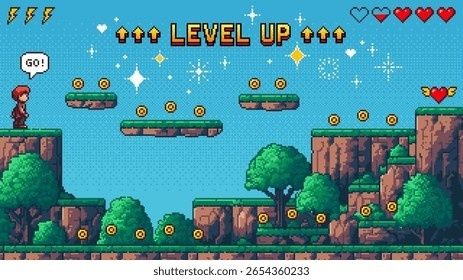
Micro-fiction games are still too often treated as warmups, student exercises, or unfinished prototypes waiting to become “proper” games. That reading misses their sharpest quality. A five-minute Bitsy piece or a compact Twine story can be a finished literary object, built around the precision of a poem rather than the expansionist logic of a blockbuster. Its smallness is not an embarrassment to hide. It is the form.
Modern urban life supplies the perfect emotional terrain for this kind of work. The subway transfer, the lift that stops on every floor, the rented room with one usable window, the message typed and deleted before a meeting begins: these are experiences of compressed time and negotiated space. Traditional games, with their sprawling maps and long progression systems, often struggle to represent that scale of alienation. Strict tools such as Bitsy and Twine do something more revealing. By limiting rooms, palettes, verbs, and pathways, they turn constraint into atmosphere, allowing a creator to make loneliness, hesitation, and fleeting connection mechanically present.
Bitsy”s tiny rooms have an almost architectural bluntness. A player can see the whole space, or nearly all of it, at once. There is no grand horizon to promise escape, no inventory full of solutions, and rarely any elaborate system to distract from the arrangement of a chair, a doorway, a character, or a single patch of colour. That low-fidelity room can become a structural metaphor for precarious urban life, where a flat is measured in square metres, privacy is shared, and movement is shaped by rent, transport, work, and other people”s schedules.
The emotional force comes from the relationship between what the player can see and what remains inaccessible. A blocked tile can represent a locked future. A corridor that loops back to the same room can suggest routine without requiring a line of explanatory dialogue. A character positioned one square away may feel intimate or impossibly distant, depending on the interaction prompt. The grid converts social pressure into geometry. In that sense, exploring experimental mechanics in grassroots interactive fiction reveals how limited palettes and simple movement can yield surprising emotional resonance.
Anna Anthropy”s Bitsy exercises are especially useful because they teach spatial rhythm rather than the construction of labyrinths. The collection grew from a class taught between 2020 and 2025, using short activities focused on movement, concise dialogue, pixel art, colour design, and screen composition. Students work within a scaffold, often for only a brief period, then show the result to the room. This pedagogy treats every tile as editorial material. The question is not how to build more world, but how to make the available world speak immediately.

| Tool or form | Primary constraint | Emotional resonance |
|---|---|---|
| Bitsy | Tiny rooms, simple movement, limited visuals | Confinement, proximity, repetition |
| Twine | Branching passages and linked text | Hesitation, consequence, competing inner voices |
| Flash fiction game | Compressed duration and narrative scope | Recognition, rupture, emotional afterimage |
Twine produces a different architecture. Its rooms are paragraphs, its doors are links, and its corridors are decisions. The tool”s accessibility matters culturally as well as technically. As Alison Harvey discusses in her analysis of game labour and Twine, tools that require little or no coding can open authorship to people excluded by conventional production pathways. The result is not merely a cheaper route to familiar games. It can produce stories that take domestic space, gendered experience, disability, anxiety, and marginality seriously because those subjects are shaping the form from within.
Interactive micro-fiction shares flash fiction”s appetite for compression. The common definitions of flash fiction vary, but forms often sit somewhere between a few words and roughly 1,500. The important principle is not a universal word count. It is the demand that a small space contain a complete shift in feeling, knowledge, or identity. A micro-game applies the same pressure to interaction. A single encounter can become a whole world if the player understands what is at stake and senses that the moment cannot be repeated in quite the same way.
That makes ordinary routines unusually potent. Waiting for a delayed train can become a timer. Looking at another passenger can become a choice with no obvious reward. Repeating a morning ritual can reveal a relationship through tiny changes in text, colour, or sound. The mechanics do not need to simulate an entire city. They need to identify the one action through which the city becomes emotionally legible. A turnstile, a vending machine, a missed call, or a seat left deliberately empty can carry more narrative weight than a sprawling quest line.
Bee, originally written by Emily Short, demonstrates how a tightly focused interactive story can hold a dense social world. Its protagonist, a home-schooled girl preparing for a national spelling bee, navigates tensions between family, friends, and the religious subcultures shaping her identity. The story”s power lies in close attention to perspective rather than spectacle. Later reconstruction and updating by Ian Millington and Autumn Chen also show how interactive works can survive through care, testing, and collaborative maintenance after their original platform disappears.
Tension in such games depends on uncertainty, not simply danger. Research discussed by The Porte Port describes people experiencing the greatest stress when a rock might contain a snake, rather than when danger is guaranteed or impossible. The same principle works in commuter fiction. A message might be answered. A stranger might speak. A familiar route might remain safe, or it might suddenly expose a buried fear. The player continues because the outcome is credible in more than one direction.
The small game also sits inside a difficult labour economy. Contemporary development culture frequently celebrates the heroic multi-year project, the tiny team that works through exhaustion, and the launch that arrives after endless nights of unpaid labour. Alison Harvey”s research places games among industries where passionate work, precarious employment, individualized risk, unpaid community production, and crunch became normalized. Specialised skills do not guarantee stable pay, especially when tools and technical expectations keep changing.
Micro-fiction offers a different production rhythm. It cannot solve precarity, and it should not be romanticised as a cure for underfunding. Yet a small interactive work can give a creator an immediate, sustainable form of expression outside the extractive cycle of building a commercial game for years before anyone sees it. A piece made in an evening may still be rough, but it can be circulated, discussed, revised, and archived. Its value does not depend on becoming a platform, a franchise, or a viable studio.
Open digital platforms are crucial to this ecology. The interactive-fiction section of itch.io”s game archive contains tens of thousands of works, including browser-playable stories, visual novels, horror experiments, dating simulations, mysteries, and hybrid role-playing games. The breadth is messy and exhilarating. It allows micro-games to exist as a community archive rather than a single canon, where a personal work can sit beside a polished release and still find its readers.
That abundance creates a curatorial challenge. Short games are easy to overlook because storefront systems tend to reward length, screenshots, wishlists, and sustained engagement. Community forums, festivals, digital exhibitions, recommendation lists, and preservation projects therefore matter enormously. The long record of interactive fiction includes both classic works and contemporary experiments, as demonstrated by the sprawling cataloguing efforts documented on the Interactive Fiction Community forum. To archive a five-minute game is to recognise that duration does not determine cultural importance.
Short games need editorial discipline. Brevity is not achieved by stopping early; it is achieved by deciding what the player must feel, notice, or reconsider before the final interaction. The best micro-fictions often behave like sharply edited gallery pieces. They establish a surface, introduce a disturbance, and then make the player complicit in interpreting what has changed.
Environmental storytelling is especially efficient because it allows the player to perform interpretation. The strongest walking simulators demonstrate that a game does not need combat, complex systems, or conventional win states to create stakes. In What Remains of Edith Finch, the family home communicates through clutter, secret routes, distinct rooms, and evidence of generations of private identity. The player is not simply collecting lore. They are learning how a place stores grief and how a family”s belief in a curse may shape the stories told about it.
Micro-games can achieve a similar effect with a fraction of the material. One room may contain a relationship. One repeated prompt may expose avoidance. One colour change may signal that the player has crossed an emotional boundary. Filler dialogue is the enemy here. If a line does not complicate the player”s understanding or sharpen the next action, it probably belongs elsewhere. The same is true of decorative interaction. A clickable object should either deepen the world, redirect attention, or create a useful contrast.
Concise design does not mean disposable design. Storyteller, Daniel Benmergui”s long-developed puzzle narrative, shows how carefully limited interactions can generate rich comic and emotional outcomes. Players arrange characters, places, and titles in storyboard vignettes, then discover how motivations and limitations reshape each scene. Its roughly two-hour scale was praised precisely because it avoids padded repetition. For a micro-fiction creator, that lesson is vital: a short experience can feel generous when every moment earns its place.
Micro-fictions represent narrative maturity rather than technical deficiency. Their makers understand that a game does not become serious by accumulating systems, maps, hours, or visual effects. Seriousness can arrive through selection: one room instead of a city, one glance instead of a romance arc, one uncertain choice instead of a branching epic. Bitsy and Twine make those decisions visible, turning the limits of production into the texture of the work.
For players, five-minute interactive pieces offer a useful recalibration of attention. They make the overlooked feel strange again: the silence between train announcements, the emotional charge of a shared doorway, the domestic object that outlives a relationship. Support these works by playing beyond the front page, paying creators where possible, sharing thoughtful recommendations, and helping community archives preserve fragile browser-based projects. The small screen canvas is not a side room of game culture. It is one of the places where the medium is learning how to speak with extraordinary economy.